
midjourney
Midjourney Prompts Guide: 5 Practical Examples for Designers
Midjourney AI Team · July 23, 2026 · 7 min read
Keywords: midjourney prompts, ai image generation, midassai studio
Published: July 23, 2026 Author: Midjourney AI Team
Who This Guide Is For
This breakdown targets visual designers, cultural heritage project managers, and game asset creators who need precise control over generative output. If you are tired of vague results and want to understand how specific modifiers alter texture, lighting, and composition, this list is for you. We are moving beyond basic text-to-image experimentation into structured asset creation.
The following five examples cover distinct use cases: promotional materials, historical data visualization, mythical jewelry design, and cultural insignia. Each prompt includes specific parameters compatible with Midjourney version 7 (--v 7). You can test these workflows directly in MidassAI Studio Midjourney to streamline your production pipeline.
1. AR Tour Promotional Poster
Augmented Reality (AR) tourism requires visuals that blend physical locations with digital overlays. The goal here is to create a poster that feels immersive without looking cluttered. We need high contrast and a sense of depth to suggest the layering of digital information over reality.
Prompt Strategy:
Focus on lighting effects that mimic holographic projections. Use --style raw to prevent the model from over-beautifying the technical elements.
/imagine prompt: promotional poster for AR city tour, holographic interface overlaying ancient street, neon blue and gold data streams, cyberpunk tourism aesthetic, high contrast lighting, depth of field --ar 2:3 --v 7 --style raw --s 250Why This Works:
The aspect ratio --ar 2:3 suits vertical marketing materials. The --style raw parameter ensures the AI adheres strictly to the "holographic" description rather than defaulting to a generic fantasy style. The stylize value --s 250 keeps the artistic interpretation balanced, ensuring text placement areas remain clear for later graphic design work.
2. Beiyang Fleet Organization Chart (Game Icon)
Historical naval data often feels dry. Converting the Beiyang Fleet structure into game-style icons makes the information engaging for educational apps or strategy games. The challenge is maintaining historical accuracy while achieving a stylized, vector-like look suitable for UI elements.
Prompt Strategy: Request flat design elements with specific color palettes associated with naval history.
/imagine prompt: set of game icons representing Beiyang Fleet organization, naval ships and rank badges, flat vector style, dark navy blue and brass gold colors, white background, clean lines, ui asset sheet --ar 16:9 --v 7 --q 2Why This Works:
Using --ar 16:9 provides a wide canvas suitable for a sheet of multiple icons. The --q 2 flag increases the rendering quality, which is crucial for sharp edges in vector-style graphics. Specifying "white background" simplifies the subsequent process of cutting out these assets for integration into your interface.
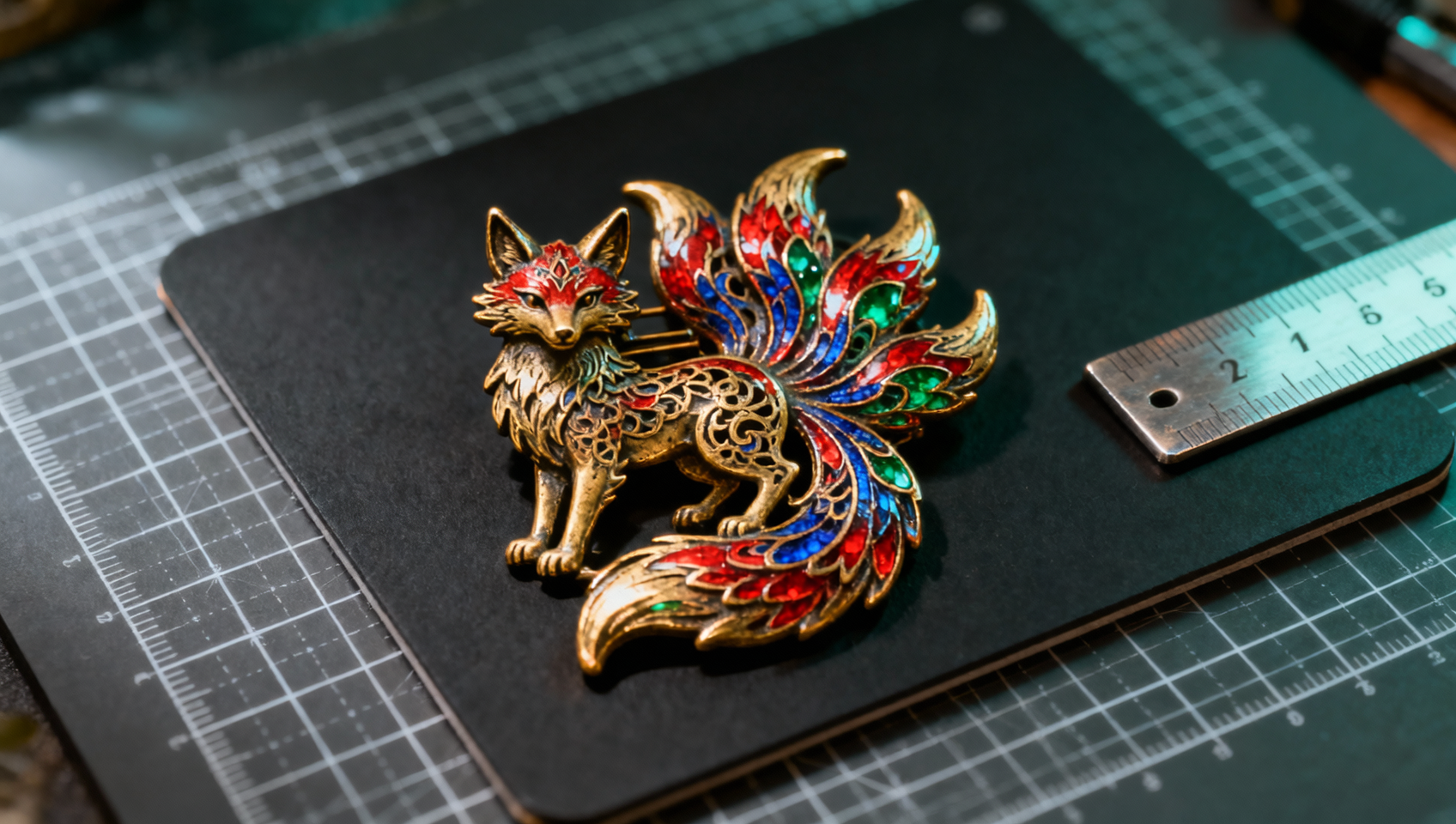
3. Shanhaijing Nine-Tailed Fox Brooch
Mythical creatures from the Shanhaijing require a delicate balance between animalistic features and ornamental design. This prompt aims to generate a wearable jewelry piece rather than a creature illustration. The focus is on materiality—gold, enamel, and gemstones.
Prompt Strategy: Emphasize macro photography and material textures to sell the idea of a physical object.
/imagine prompt: nine-tailed fox brooch inspired by Shanhaijing, intricate gold filigree, ruby eyes, enamel tails, macro product photography, soft studio lighting, black velvet background, jewelry design --ar 4:5 --v 7 --style rawWhy This Works:
The --ar 4:5 ratio is ideal for social media showcases or catalog listings. By specifying "macro product photography," we force the renderer to focus on fine details like prong settings and metal texture. --style raw is critical here to prevent the fox from looking too alive; we want it to look like a crafted object.
4. Dingyuan Collar Badge (Pocket Ornament)
The Dingyuan ironclad is a significant historical subject. Creating a collar badge or pocket ornament based on this vessel requires respect for historical insignia shapes while allowing for artistic interpretation. This asset works well for museum merchandise or historical reenactment groups.
Prompt Strategy: Define the metal type and the specific shape of the badge to avoid generic shield shapes.
/imagine prompt: Dingyuan ironclad collar badge, pocket ornament style, antique brass metal, embossed ship profile, circular frame, weathered texture, historical military insignia, isolated on grey --ar 1:1 --v 7 --q 2Why This Works:
A square aspect ratio --ar 1:1 centers the object perfectly for cataloging. "Antique brass" and "weathered texture" give the object age and authenticity, distinguishing it from a shiny, new replica. This prompt is particularly effective when used with reference images in MidassAI Studio to match existing collection items.
5. Hanfu Woman Metal Badge
Cultural badges featuring Hanfu motifs need to capture the elegance of the clothing and the grace of the subject without becoming overly complex. This is suitable for cultural exchange events or fashion accessory design.
Prompt Strategy: Focus on the silhouette and the metal finish. Avoid full facial details which can become distorted in small badge formats.
/imagine prompt: metal badge featuring silhouette of woman in Hanfu, flowing sleeves, silver and cloisonné finish, elegant profile view, minimalist design, cultural heritage symbol, white background --ar 1:1 --v 7 --style rawWhy This Works:
Silhouettes render more cleanly at small sizes than full portraits. The "cloisonné finish" adds a specific cultural texture associated with traditional Chinese craftsmanship. Using --style raw ensures the AI doesn't add unnecessary background elements that would interfere with the badge shape.
Optimizing Your Workflow with Parameters
Successful generation is not just about the subject; it is about controlling the output parameters. In Midjourney v7, the interaction between --style and --sref (style reference) can drastically change consistency across a project.
Quick Takeaways
When working on a series, such as the badges above, consistency is key. You can generate one successful image and use its URL as a --sref in subsequent prompts to maintain a uniform metal texture and lighting style. For example, once you perfect the lighting on the Nine-Tailed Fox brooch, apply that same style reference to the Hanfu badge to ensure they look like part of the same collection.
Additionally, consider using --cref (character reference) if you are generating a series of images featuring the same historical figure or mascot across different contexts. This keeps facial features or specific design elements consistent without needing to describe them repeatedly in every prompt.
Moving from Generation to Production
Generating the image is only the first step. For professional use, you will likely need to upscale the resolution and remove backgrounds. MidassAI Studio Midjourney integrates these generation capabilities with tools that allow you to manage these assets efficiently.
Avoid the temptation to over-prompt. A prompt that is too long can confuse the model, leading to muddy compositions. Start with the core subject, add the material descriptors, and finish with the technical parameters. If the result is close but not perfect, tweak one variable at a time. Change the lighting before changing the composition. Change the aspect ratio before changing the subject matter.
For teams collaborating on cultural projects, maintaining a library of successful prompts is invaluable. Document which parameters worked for the Beiyang Fleet icons versus the AR poster. This institutional knowledge speeds up future projects and ensures brand consistency across all AI-generated materials.
Next Steps
These five examples provide a foundation for structured prompt engineering. Whether you are creating marketing materials for a tech tour or designing historical artifacts for a game, the principles of specificity and parameter control remain the same.
To implement these prompts without managing complex command-line syntax, use the integrated environment provided by our platform.
Try Midjourney in MidassAI Studio
By leveraging these tools, you shift focus from troubleshooting generation errors to refining creative direction. Start with the prompts above, adjust the variables to fit your specific brand guidelines, and integrate the outputs into your wider design system.