
Midjourney Cartoon Boy Prompt Guide: Stable Character Generation
Midjourney AI Team · July 23, 2026 · 7 min read
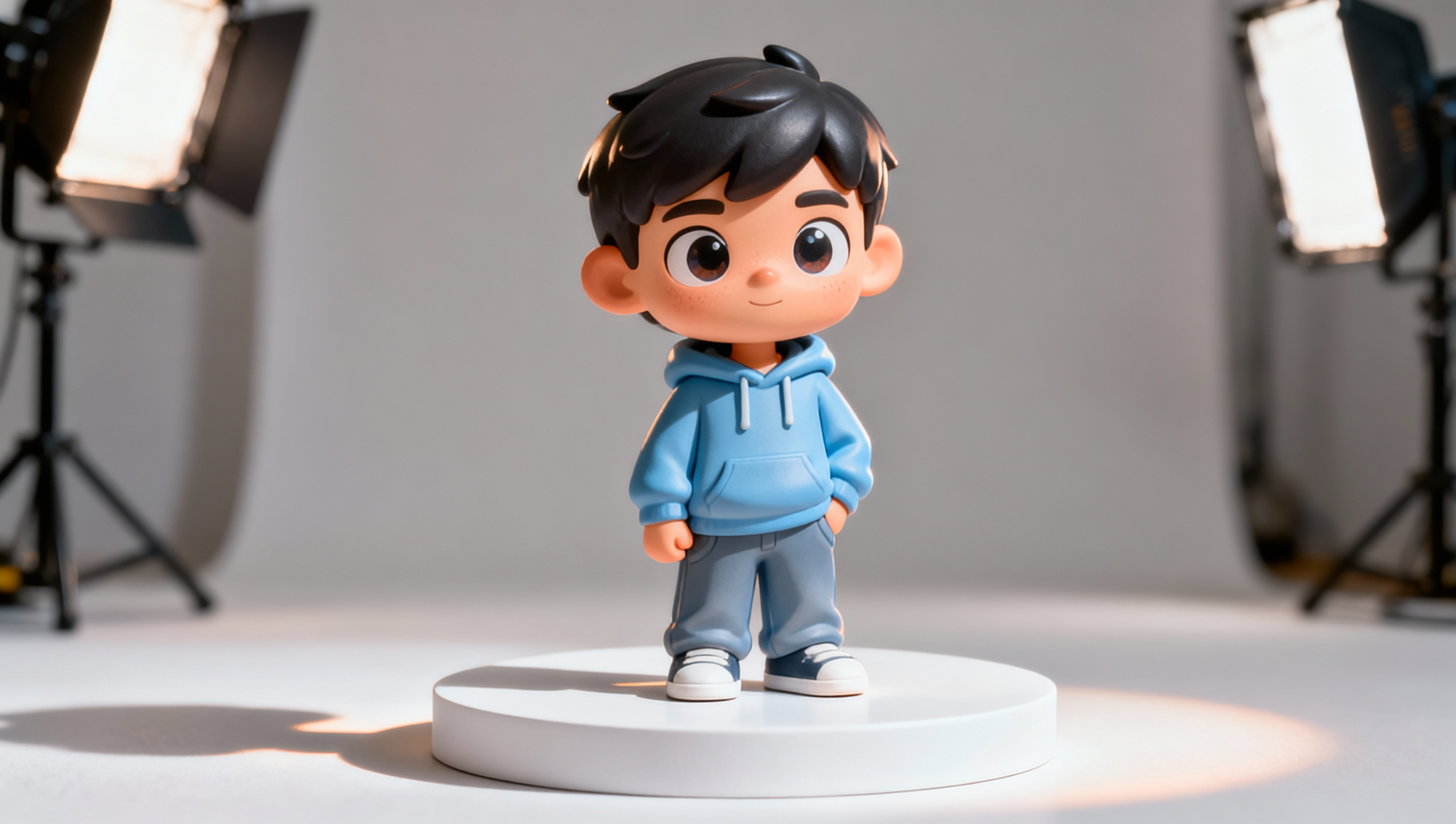
Deconstructing the Cartoon Boy Aesthetic
Creating a consistent cartoon boy character in Midjourney requires more than typing "cute boy" into the prompt box. Successful character design relies on specific anatomical ratios, line quality, and color theory that translate well into generative AI. When building a brand IP or a comic strip, stability is the primary metric of success. You need the character to look like the same person across different poses and lighting conditions.
The foundation of a cartoon boy prompt lies in proportion. Standard human proportions do not apply here. For a youthful, approachable look, aim for a head-to-body ratio of roughly 1:3 or 1:4. In Midjourney syntax, you describe this through keywords like "chibi," "big head," or "stylized proportions." Line weight is equally critical. Thick, clean outlines suggest a vector art style suitable for logos, while sketchy, textured lines imply a storybook feel.
Color palettes define the mood. For a general audience, saturated pastels work well. If you are targeting a edgier demographic, neon accents against dark backgrounds create contrast. Expressions should be explicit in the prompt. Instead of "happy," use "wide grin, squinting eyes" to give the model concrete geometric instructions. Ambiguity is the enemy of consistency.
Building the Prompt Structure
A robust prompt structure separates the subject from the style and the technical parameters. When working in MidassAI Studio Midjourney, you have access to the full range of Midjourney parameters to enforce this structure. Start with the subject description. Define age, hair color, clothing, and specific accessories. A hoodie is different from a school uniform; a skateboard implies a different lifestyle than a book.
Next, define the art style. Are you looking for flat 2D vector art, 3D render, or hand-drawn ink? Use modifiers like "flat illustration," "cel shading," or "watercolor texture." Lighting should support the dimensionality. "Softbox lighting" reduces harsh shadows, which is ideal for clean character sheets. "Volumetric lighting" adds drama but can obscure details.
Finally, append the parameters. The aspect ratio --ar dictates the composition. Use --ar 1:1 for avatars and --16:9 for comic panels. The stylize value --s controls how much artistic freedom Midjourney takes. For character consistency, keep --s lower (around 100-250) to adhere strictly to your prompt. Always specify the version, such as --v 7, to ensure you are using the latest model capabilities.
Quick Takeaways
Practical Example Prompts
To illustrate these principles, consider the following prompt structures. These examples are designed to be copied and adapted within your workflow. Notice the separation of concerns between the visual description and the technical constraints.
Example 1: The Avatar Style
/imagine prompt: cute cartoon boy character, big head small body, wearing blue hoodie and headphones, simple flat vector art, thick clean lines, white background, soft pastel colors --ar 1:1 --style raw --v 7 --s 150
This prompt prioritizes clarity. The --style raw parameter reduces Midjourney's internal beautification, keeping the lines simple and usable for logo design. The white background ensures easy抠图 (cutout) for later use.
Example 2: The Comic Strip Style
/imagine prompt: young boy adventurer, exploring forest, dynamic pose, detailed background, cel shaded, vibrant colors, comic book style, expressive face --ar 16:9 --v 7 --s 250
Here, the aspect ratio shifts to widescreen to accommodate narrative context. The stylize value is slightly higher to allow for more creative background generation while keeping the character recognizable.
Example 3: Consistency Reference
/imagine prompt: boy playing soccer, same character style --ar 4:5 --cref [URL] --cw 10 --v 7
When you have a base image you like, use the --cref (character reference) parameter. This is crucial for maintaining facial features across different scenarios. The --cw (character weight) parameter controls how much of the reference image is copied. A low value like 10 focuses only on the face, allowing you to change clothes and poses freely.
Extending Assets Across Media
Once you have generated a stable character set, the utility extends beyond static images. The outline of modern creation involves multi-modal assets. Your Midjourney generation serves as the foundational layer for broader media projects.
AI Image Applications The primary output is static imagery. These files are ready for social media avatars, sticker packs, or merchandise printing. Ensure you upscale the final selection to maximize resolution. In MidassAI Studio, you can manage these generations efficiently without switching contexts.
AI Video Integration Static characters can be animated. Use your generated character sheets as input for image-to-video models. A consistent character face from Midjourney ensures that when the video model interpolates motion, the identity does not drift. You can create short loops for social media reels or animated intros for YouTube channels.
AI Music and Branding Visual identity pairs with audio identity. Use your character art as album covers or podcast thumbnails. If you are generating AI music to accompany a brand story, the visual tone set by your cartoon boy should match the audio mood. A playful character suggests upbeat tempos, while a melancholic design suits lo-fi beats.
AI Tool Workflows Integrate these assets into larger toolchains. Import your PNGs into design software for layout work. Use them as texture maps for 3D modeling if you decide to expand into spatial computing. The flexibility of the prompt structure allows you to regenerate variations whenever your brand guidelines shift.
Maintaining Consistency with Parameters
The biggest hurdle in character generation is drift. You generate a boy today, and he looks different tomorrow. To combat this, rely on --sref (style reference) and --cref (character reference). Upload a successful generation to get its URL, then feed that URL back into future prompts.
When using --cref, remember that it locks facial features and hair. It does not lock clothing unless you use a high character weight. For a brand IP, you might want the character to wear different outfits. In this case, keep --cw low. If you need a uniform, keep --cw high.
Lighting consistency is often overlooked. If your first image uses "studio lighting," ensure all subsequent prompts include that phrase. Inconsistent lighting makes the character look like they exist in different universes. Write down your successful modifiers in a text file. Treat your prompt like code; version control your text strings just as you would a software project.
Optimizing Your Workflow in MidassAI Studio
Executing these prompts requires a stable environment. MidassAI Studio provides a streamlined interface for managing these complex workflows. You can save your preferred parameter sets and reuse them without retyping. This reduces the chance of syntax errors that break the generation.
When you are ready to move from experimentation to production, switch to --style raw for more predictable results. Use the upscaler tools to prepare files for print. If you need variations, use the "Vary (Region)" feature to change only the background or the clothing while keeping the face intact. This saves time compared to regenerating the entire image.
Consistency is a process, not a single prompt. It requires iteration. Generate a batch, select the best face, use that as a reference, and generate again. Over time, you build a library of assets that all belong to the same visual family. This is how professional IP is built in the age of generative AI.
Start building your character library today. Test these prompt structures and refine them to fit your specific brand voice. For a seamless experience with advanced parameters and workflow management, try the dedicated environment designed for creators.