
Midjourney Kingfisher Prompts: Photography and Illustration Guide
Midjourney AI Team · July 23, 2026 · 6 min read
Choosing Between Photorealism and Illustration
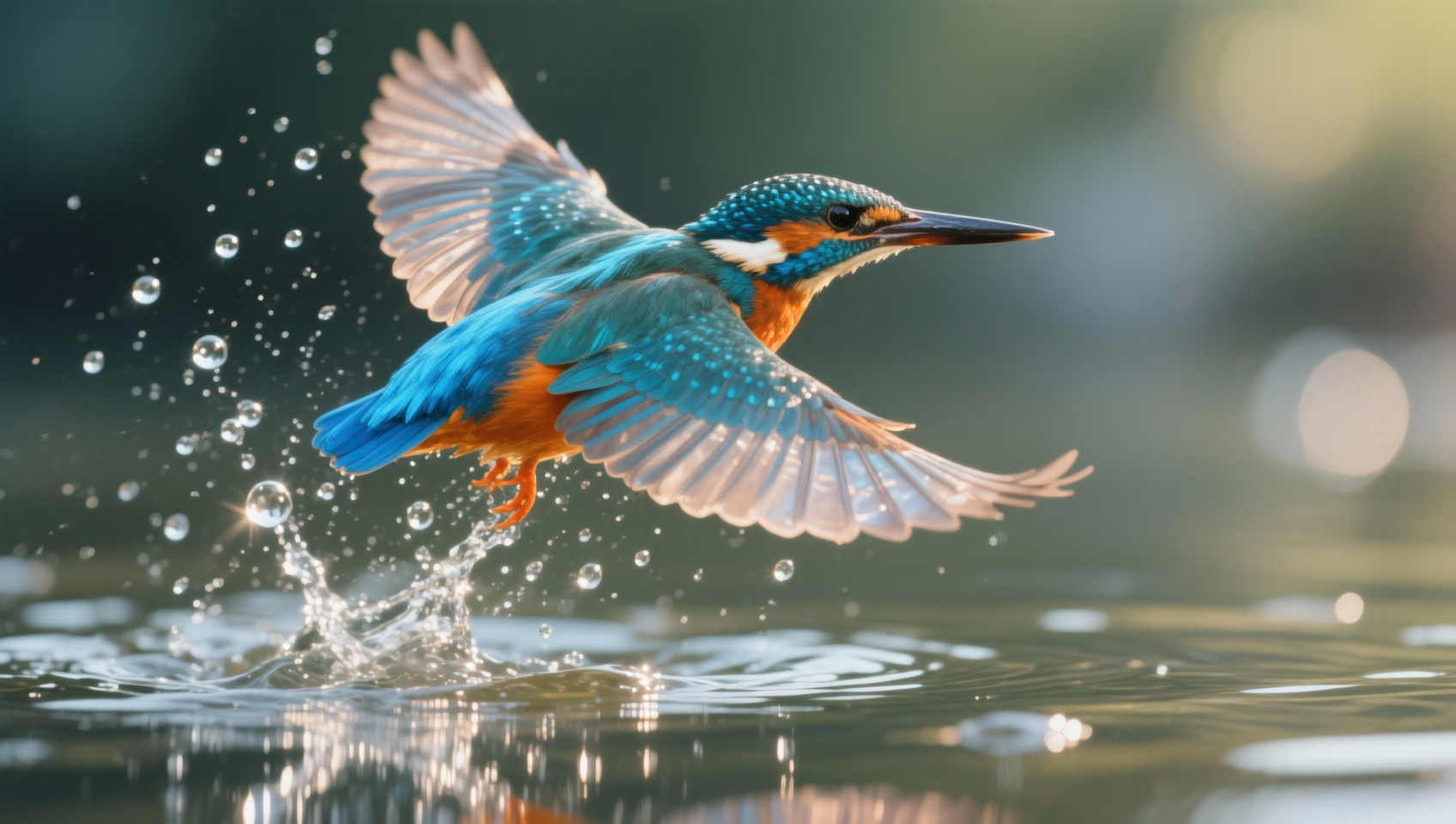
Capturing the essence of a kingfisher in AI generation requires more than just typing "bird." The kingfisher is defined by specific visual markers: iridescent blue plumage, a long pointed beak, and the dynamic tension of a dive or hover over water. When working within Midjourney on MidassAI Studio, your first decision dictates the parameter stack you will use. Are you aiming for a National Geographic-style wildlife shot, or a stylized botanical illustration?
The distinction matters because the lighting models and texture priorities differ significantly. Photorealism demands accurate light refraction on water and individual feather separation. Illustration prioritizes shape language, color harmony, and stroke texture. Using the wrong style parameters for your goal often results in uncanny valley effects, where feathers look like plastic or water resembles glass.
{"headers":["Style Feature","Photography Benefit","Illustration Benefit"],"rows":[["Texture","Real feather detail via --style raw","Stylized brush strokes via --niji"],"["Lighting","Natural sun reflection on water","Controlled studio or flat lighting"],["Motion","Freeze-frame shutter speed effect","Exaggerated motion lines or blur"]]}For wildlife photography, we rely on --style raw to reduce Midjourney's default beautification filters. This allows the noise and imperfections of a real camera sensor to come through, which is crucial for convincing water splashes. For illustration, we might lean into --niji 6 or specific artist references to flatten the depth slightly, emphasizing the color blocks of the bird's plumage.
Deconstructing the Prompt Structure
A robust prompt for a kingfisher needs to address three layers: the subject, the environment, and the technical camera specs. Many users fail because they overload the subject description while neglecting the environment. A kingfisher without water context loses its identity.
Here is a breakdown of a high-performance prompt structure for photorealism. Notice the placement of technical parameters at the end to ensure they modify the entire generation rather than just the last word.
/imagine prompt: common kingfisher diving into river, water splash frozen in time, iridescent blue and orange feathers, macro photography, shallow depth of field, natural sunlight --ar 16:9 --style raw --v 7 --s 250
The --ar 16:9 aspect ratio is critical here. Wildlife photography rarely looks good in a square crop; you need horizontal space to show the trajectory of the dive. The --s 250 (stylize) value is kept moderate. High stylization values often over-process wildlife, making the feathers look painted rather than photographed.
When targeting illustration, the syntax shifts. You want to define the medium explicitly.
/imagine prompt: kingfisher perched on branch, watercolor illustration, soft edges, botanical art style, white background, detailed plumage --ar 4:5 --v 7 --niji 6
In this scenario, the --niji 6 model handles the anime and illustration aesthetics better than the base model. The aspect ratio changes to 4:5 to suit portrait-oriented prints or social media cards.
Managing Consistency with References
If you are building a series of images where the kingfisher needs to look identical across different poses, character references (--cref) are essential. However, for wildlife, style references (--sref) are often more useful. You can take a photo of water texture or feather lighting you like and pass it as a style reference.
/imagine prompt: kingfisher hunting --sref [URL_of_water_texture] --v 7
This forces Midjourney to adopt the lighting and color grading of your reference image while generating the new bird composition. This is particularly effective in MidassAI Studio, where managing asset libraries is streamlined.
Expanding Beyond Static Images
Generating a single image is often just the starting point for a larger content pipeline. The kingfisher assets you create can feed into video, music, and interactive tool workflows. Understanding how your initial prompt affects downstream media saves hours of revision later.
AI Video Integration
Static images of kingfishers are excellent inputs for image-to-video models. If your initial Midjourney generation has clear motion blur or a dynamic pose (like a dive), video AI tools can extrapolate that movement. However, if the prompt generates a static perch, the resulting video may look unnatural. Always prompt for "action" or "motion" in your initial image generation if video is the end goal. Parameters like --chaos 10 can introduce slight variations in wing position, giving video models more data to work with when interpolating frames.
AI Music and Atmosphere
While less direct, the visual mood of your kingfisher image can dictate audio generation prompts. A dark, moody river scene suggests ambient water sounds and low-frequency drones. A bright, high-contrast illustration suggests upbeat, acoustic instrumentation. When documenting your projects in MidassAI Studio, tag your images with audio mood descriptors. This metadata helps when pairing visuals with generative audio tracks later.
Tool Interoperability
Your generated assets are not dead ends. A high-resolution kingfisher illustration can be vectorized for logo design or used as a texture map in 3D modeling. Ensure you upscale your images within the studio environment before exporting. The default grid output is rarely sufficient for print or commercial use. Use the upscaler tools to maximize detail in the feather textures before moving the asset to other software.
Optimizing Your Workflow in MidassAI Studio
Executing these prompts efficiently requires a stable environment. Running complex parameter stacks locally or on unstable connections can lead to lost generations. MidassAI Studio provides a optimized interface for handling Midjourney workflows, ensuring that your parameter strings are processed correctly without syntax errors.
When you try these workflows in MidassAI Studio Midjourney, you gain access to history tracking and version control. This is vital when tweaking prompts. You might run the kingfisher prompt ten times, adjusting only the --s value each time. Without a structured studio environment, tracking which stylize value produced the best water refraction becomes difficult.
Additionally, the studio environment allows for faster iteration on style references. You can upload your own photography of local birds to use as --sref or --cref without worrying about external hosting links expiring. This keeps your workflow self-contained and professional.
Common Pitfalls to Avoid
- Over-describing the Bird: Midjourney knows what a kingfisher is. Adding too many adjectives like "beautiful," "amazing," or "perfect" dilutes the prompt. Stick to physical descriptors: "long beak," "blue back," "orange chest."
- Ignoring Lighting Direction: Specify "side lighting" or "backlit" to give the feathers volume. Flat lighting makes the bird look like a sticker.
- Neglecting Water Physics: Water is hard for AI. Use terms like "surface tension," "refraction," or "splash crown" to guide the model toward realistic water interaction rather than generic blue blobs.
By treating the prompt as a technical specification rather than a wish list, you gain consistent control over the output. Whether you need a stock photo alternative or a concept art piece, the parameters remain the lever you pull to adjust the result.
Ready to test these parameters with higher stability and faster rendering?