
Midjourney Miniature Prompt Guide: Tilt-Shift & Macro Aesthetics
Midjourney AI Team · July 23, 2026 · 7 min read
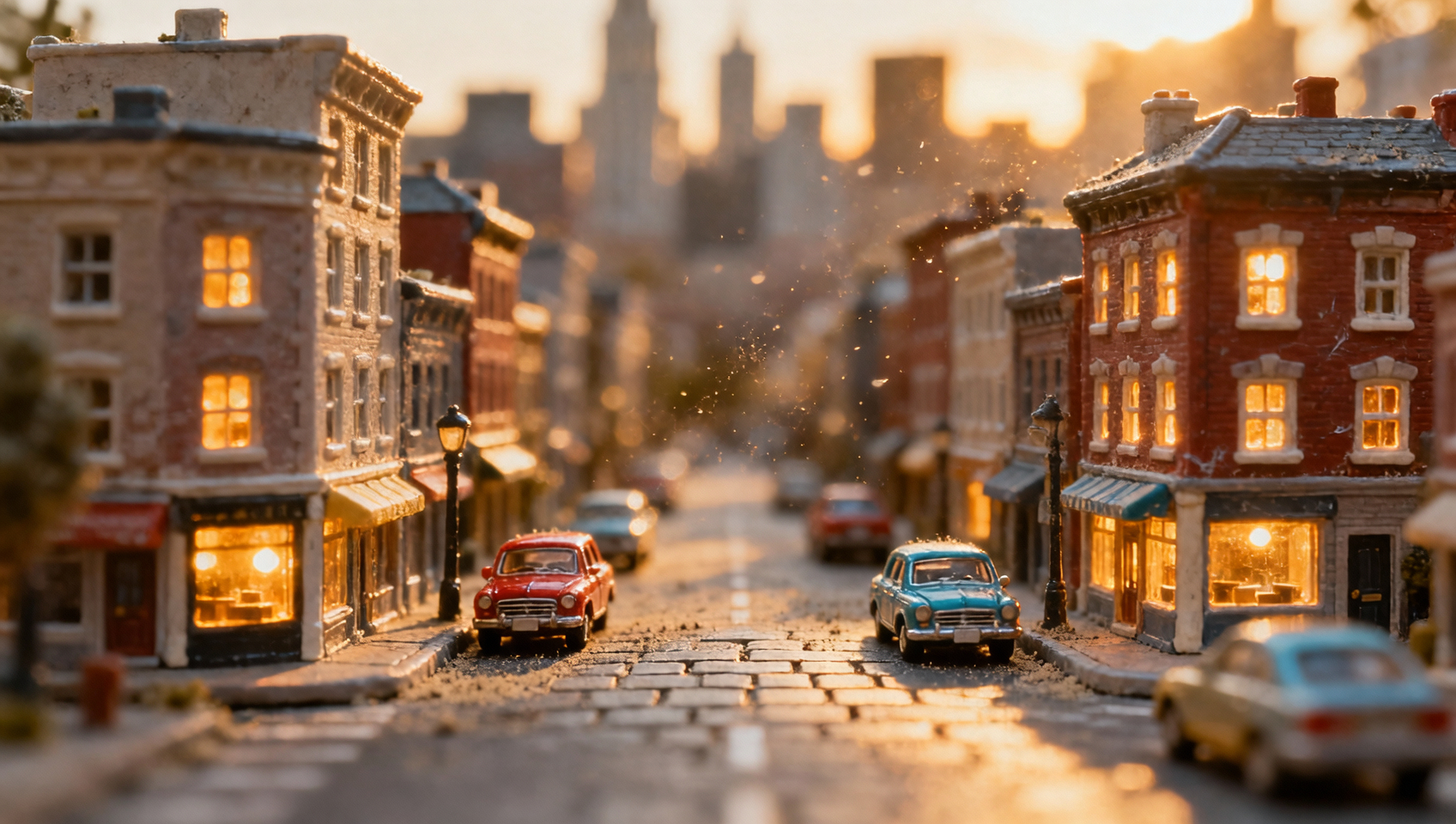
Mastering the Miniature Aesthetic in Midjourney
There is a specific charm to miniature photography that triggers a sense of nostalgia and wonder. Whether it is a tiny cityscape glowing under soft streetlights or a cute animal figurine sitting on a mossy rock, the "tilt-shift" look manipulates depth of field to make real-world scenes appear like toys. Recreating this effect generatively requires more than just adding the word "small" to your prompt. It demands a understanding of optical simulation, lighting ratios, and specific Midjourney parameters that control focus and texture.
This guide breaks down the exact formula for generating high-fidelity miniature scenes using Midjourney on MidassAI Studio. We will move beyond generic advice and focus on the technical levers you can pull to control scale, blur, and material realism.
Who This Workflow Is For
This tutorial is designed for creators who need consistent, stylized imagery without organizing physical photoshoots. Specifically, this approach benefits:
- E-commerce Designers: Creating product mockups that look like collectible figures.
- Content Creators: Generating unique thumbnails or wallpapers that stand out due to their depth.
- Concept Artists: Visualizing environments with a playful, diorama-like quality.
- Social Media Managers: Producing治愈 (healing/comforting) content that performs well on visual platforms.
If you are looking for photorealism that mimics full-scale reality, this is not the guide for you. However, if you want to stylize reality into something tangible yet small, the following framework will streamline your process.
Quick Takeaways
The Prompt Formula for Tilt-Shift Effects
Achieving the miniature look relies on欺骗ing the AI into rendering a shallow depth of field. In real photography, this is done with a tilt-shift lens or a macro lens with a wide aperture. In Midjourney, we replicate this through specific keyword clustering.
The base structure should follow this order: Subject + Environment + Lighting + Camera Simulation + Style Modifiers.
For the Subject, be specific about materials. Miniature models often have specific textures like plastic, resin, or painted ceramic. Use descriptors like polymer clay, die-cast metal, or painted figurine.
For the Environment, context implies scale. A cat sitting on a sofa looks normal. A cat sitting on a thimble looks miniature. Use props to enforce scale, such as giant mushrooms, matchbox houses, or oversized books.
For Camera Simulation, this is the most critical component. You must explicitly state the optical effect. Essential keywords include tilt-shift photography, macro lens, shallow depth of field, and bokeh. The term miniature faking is also recognized by the model as a stylistic cue.
For Lighting, miniature scenes often benefit from soft, diffused light that mimics studio setups. Terms like softbox lighting, volumetric fog, and warm ambient glow help sell the illusion of a controlled environment rather than chaotic reality.
Parameter Tuning for Scale and Quality
Keywords alone often result in images that look like regular photos with a blur filter applied. To truly integrate the effect into the generation process, you need to leverage Midjourney parameters.
Aspect Ratio (--ar)
Miniature scenes often work best in square or 4:3 formats, mimicking classic toy photography or instant film. Try --ar 4:3 or --ar 1:1. Wider aspect ratios like 16:9 can work for dioramas but may dilute the focus on the central subject.
Stylize (--s)
Keep the stylize value moderate. High stylization can introduce artistic aberrations that break the realism of the materials. A value between 100 and 250 keeps the image grounded while allowing for aesthetic enhancement.
Style Raw (--style raw)
This is crucial for lighting control. When you want specific lighting conditions like rim lighting or subsurface scattering on plastic materials, --style raw reduces Midjourney's default beauty filters. This allows your prompt's lighting instructions to take precedence, resulting in more accurate material representation.
Version (--v 7)
Always aim for the latest version available in MidassAI Studio. Newer models understand spatial relationships and lighting physics better. As of now, --v 7 offers superior handling of complex depth cues compared to earlier iterations.
Concrete Prompt Examples
Here are two distinct examples you can test immediately. Note how the material descriptors and camera settings interact.
Example 1: The Cozy Room Diorama
Prompt:
a cozy miniature bedroom inside a glass jar, tiny bed with knitted blanket, soft warm lamp light, dust motes dancing in light, tilt-shift photography, macro lens, f/2.8, shallow depth of field, bokeh background, polymer clay texture, isometric view --ar 4:3 --style raw --v 7
Example 2: The Forest Creature
Prompt:
a cute hedgehog figurine sitting on a mossy stone, giant acorn nearby, forest floor background, soft natural sunlight, dappled light, miniature effect, tilt-shift, macro photography, highly detailed resin texture, cinematic lighting --ar 3:2 --s 200 --v 7
When running these in MidassAI Studio, generate a grid of four variations. Look closely at the edges of the subject. If the blur looks artificial or digital, add optical blur to the prompt. If the textures look too real (like fur instead of plastic), add toy material or figurine.
Downstream Applications and Workflow
Once you have generated your base image, the utility extends beyond static posts. The miniature aesthetic is highly versatile across different media formats.
AI Image Applications The primary use case is static content. These images perform exceptionally well as e-commerce hero images because the "toy" aesthetic reduces visual clutter and focuses attention on the subject. They also serve as excellent wallpapers for mobile devices, where the vertical aspect ratio complements the depth of field.
AI Video Integration You can animate these static generations using external AI video tools. Because miniature scenes often have simple, contained movements (like a blinking light or falling snow), they translate well to motion. Input your Midjourney generation into an image-to-video model to create looping cinemagraphs. The shallow depth of field helps mask minor motion artifacts that often plague AI video.
AI Music and Atmosphere For multimedia projects, pair these visuals with lo-fi or ambient audio. The visual nostalgia of the miniature style pairs naturally with chill-hop or acoustic tracks. This combination is effective for relaxation apps or background content for streams.
AI Tool Ecosystem Integrate this workflow into a larger pipeline. Use MidassAI Studio for the base generation, then employ upscaling tools for print resolution. You can also use inpainting tools to swap out specific elements within the diorama without regenerating the entire scene, maintaining consistency across a series of images.
Common Pitfalls to Avoid
Even with the right formula, errors occur. The most common issue is scale ambiguity. If the AI is unsure how big the subject is, it will default to human scale. Always include a reference object of known size, such as a coin, pencil, or hand, to anchor the perspective.
Another pitfall is excessive blur. While depth of field is key, blurring the main subject ruins the image. Ensure your prompt specifies sharp focus on subject alongside the blur commands. If the background is too busy, it distracts from the miniature effect. Simplify the background description to blurred neutral background or soft bokeh.
Finally, avoid inconsistent lighting. Miniature scenes are usually shot in controlled environments. If your prompt mixes natural sunlight with neon studio lights, the shadows will conflict, breaking the illusion. Stick to one primary light source description.
Final Thoughts
Creating convincing miniature imagery in Midjourney is about controlling perception. By combining specific material keywords with optical parameters, you can generate scenes that feel tactile and intimate. The key is iteration; rarely does the first grid hit perfection. Adjust your lighting descriptors and material tags based on the output until the scale feels right.
For a streamlined experience with access to the latest models and parameters, utilize the dedicated workspace available through our partner platform.
Try Midjourney in MidassAI Studio to start building your miniature worlds today.