
Midjourney
How to Create Solarpunk Eco-Future Cities with Midjourney | Complete Prompt Guide
Midjourney AI Team · July 23, 2026 · 6 min read
Keywords: Midjourney Solarpunk prompts, eco未来城 AI 绘画, Midjourney architecture guide
Published: July 23, 2026 Author: Midjourney AI Team
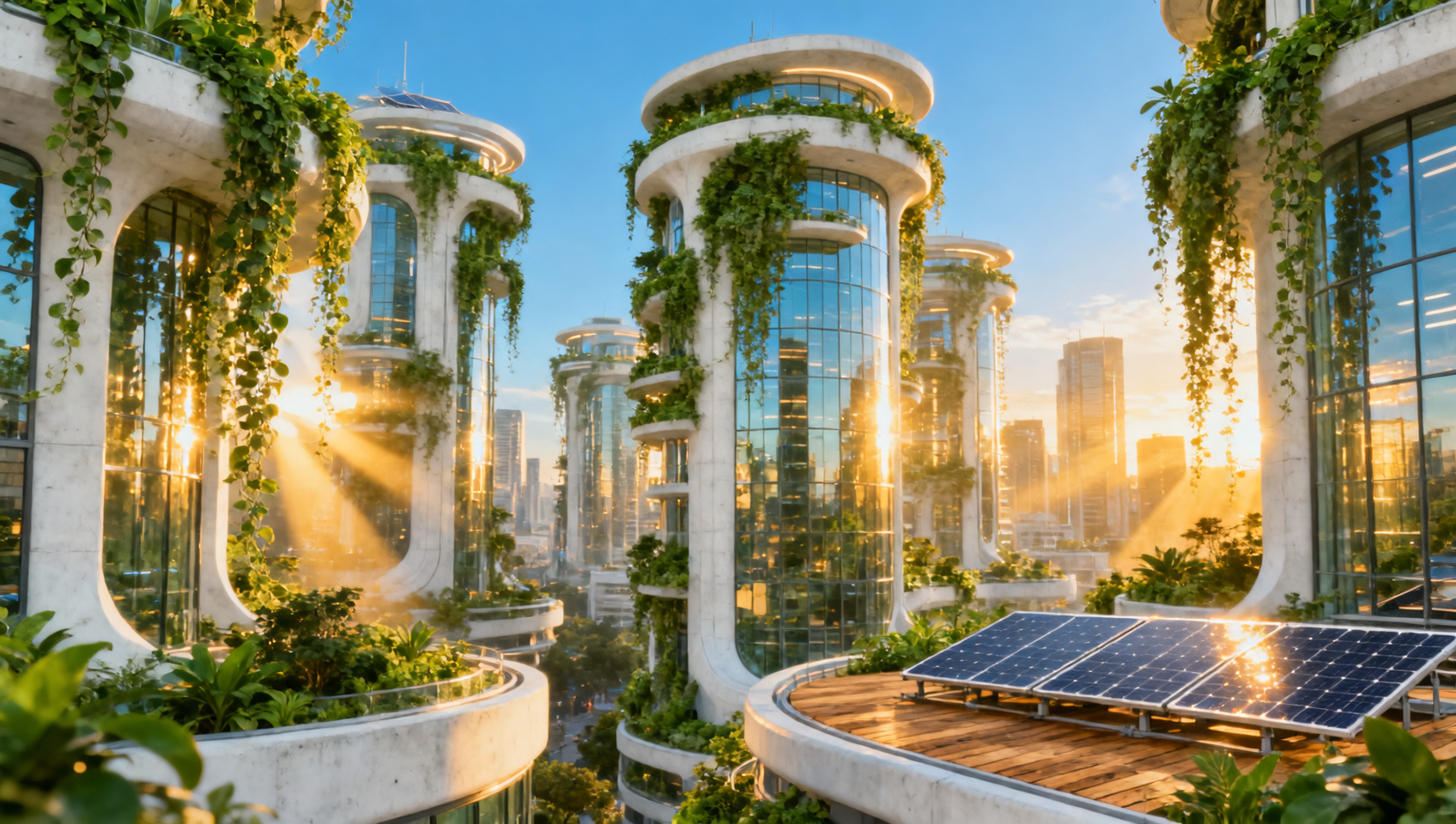
Who This Guide Is For and Why Solarpunk Matters
This guide is designed for concept artists, architectural visualizers, and world-builders who need to generate optimistic, sustainable future scenarios. Unlike Cyberpunk, which relies on neon grit and rain-slicked streets, Solarpunk focuses on harmony between technology and nature. It requires a nuanced understanding of light, organic textures, and integrated infrastructure.
Midjourney version 7 excels at this aesthetic because its lighting model handles complex translucency—like glass greenhouses and solar panels—without washing out details. However, achieving a coherent Solarpunk look requires more than typing "future city." You need to control the color temperature, material definitions, and the degree of natural overgrowth. In this workflow, we will break down the specific tokens that trigger these renders and provide four copy-paste prompts you can test immediately in MidassAI Studio.
Why Midjourney v7 Excels at Solarpunk Aesthetics
Solarpunk is visually dense. It combines hard surface modeling (buildings, panels) with organic chaos (vines, trees, moss). Earlier models often struggled to blend these without making the architecture look decayed or the plants look plastic. Midjourney v7 introduces improved texture differentiation. It understands the difference between photovoltaic glass and standard window pane glass.
The key advantage here is the handling of global illumination. Solarpunk scenes are typically bathed in warm, natural light—golden hour or bright morning sun. Midjourney's rendering engine now calculates how light bounces off white ceramic cladding and through leaves simultaneously. This prevents the "muddy" look common in AI architecture where shadows become too dark. To leverage this, we avoid excessive contrast keywords and instead focus on light quality descriptors like volumetric lighting or subsurface scattering for vegetation.
Deconstructing the Prompt: Light and Color Palette
The emotional core of Solarpunk is optimism. Your color palette must reflect this. Avoid cold blues or high-contrast noir shadows. Instead, build your prompt around warm spectrums and natural hues.
Core Color Keywords:
warm sunlight: Sets the base temperature.bioluminescent accents: For night scenes without losing the eco-friendly vibe.verdant green: Specifies the type of greenery (lush vs. dead).white ceramic and wood: Defines the building materials as clean and sustainable.
Core Light Keywords:
golden hour: Provides the signature warm glow.soft shadows: Prevents the image from looking too harsh or industrial.lens flare: Adds a cinematic, optimistic feel.ray tracing: Enhances the realism of glass and water reflections.
When constructing your prompt, place these lighting descriptors early. Midjourney weights the first few tokens more heavily. A structure like /imagine prompt: [Subject], [Lighting], [Color Palette], [Style] ensures the mood is established before the model details the architecture.
Blending Architecture with Nature
The defining feature of Solarpunk is integration. Technology should not dominate nature; they should coexist. In prompt engineering, this means using connective prepositions and fusion keywords. Do not simply list "building" and "trees." Use phrases that imply growth and structure.
Core Architecture & Nature Keywords:
vertical forest: Tells the model to grow plants up the sides of structures.integrated solar panels: Ensures panels look part of the design, not tacked on.curved organic architecture: Avoids brutalist straight lines in favor of flow.green roofs: Adds topology to the building tops.bioswale streets: Indicates permeable, plant-filled roadways.
For best results, use the --style raw parameter. This reduces Midjourney's default artistic embellishment and adheres closer to your literal description, which is crucial for architectural consistency. If you want the plants to look specific, reference a plant type like monstera or bamboo rather than generic plants.
Composition and Camera Control
Solarpunk scenes vary from intimate street markets to massive cityscapes. Your aspect ratio and camera lens settings dictate the scale. For wide cityscapes, wide-angle lenses capture the scope of the green infrastructure. For details, macro settings highlight the texture of the materials.
Core Composition Keywords:
wide angle: Captures the scale of the eco-city.aerial view: Shows the network of green corridors.eye-level shot: Creates human connection for street scenes.depth of field: Isolates specific architectural details.
Always set an aspect ratio (--ar). Solarpunk cityscapes benefit from cinematic widescreen formats like 16:9 or 21:9, while social media assets work better with 4:5. Consistency here is key for building a cohesive portfolio.
Quick Takeaways
4 Copyable Prompts for Immediate Use
Below are four refined prompts covering different scales of Solarpunk design. You can copy these directly into MidassAI Studio. We have included parameters for version 7 and stylization to ensure high-quality output.
Case 1 — Eco-Future City Skyline (Cover Image) This prompt focuses on the macro scale, establishing the relationship between skyscrapers and the sky.
/imagine prompt: sprawling solar punk city skyline, skyscrapers covered in vertical forests, integrated wind turbines and solar glass, warm golden hour sunlight, volumetric lighting through clouds, verdant green and white ceramic materials, cinematic wide shot, hyperrealistic --ar 16:9 --v 7 --style raw --s 250Case 2 — Glass Greenhouse Arcology (Building Detail) Here we zoom in to show material texture and the fusion of living space with agriculture.
/imagine prompt: close-up of residential arcology, curved glass greenhouse balconies, lush hanging gardens, monstera and fern details, sunlight filtering through leaves, white sustainable concrete, soft shadows, architectural photography --ar 4:5 --v 7 --style raw --s 150Case 3 — Street Level Community Market (Human Narrative) Solarpunk is about people. This prompt generates a scene with human activity and street-level greenery.
/imagine prompt: bustling street market in eco city, pedestrians walking under tree canopies, solar powered street lamps, wooden stalls with fresh produce, vibrant colors, eye-level shot, depth of field, optimistic atmosphere --ar 3:2 --v 7 --s 300Case 4 — Aerial Eco-Network (City Scale) This view demonstrates the infrastructure connectivity, perfect for planning or concept overviews.
/imagine prompt: aerial drone view of solar punk urban network, interconnected green bridges between buildings, rivers flowing through city center, renewable energy hubs, bright daylight, clear blue sky, map-like clarity --ar 16:9 --v 7 --style raw --s 200Refining Your Workflow in MidassAI Studio
Generating the image is only the first step. To maintain consistency across a project, use the --sref (style reference) parameter. Once you generate a Solarpunk image you like, copy its URL and add --sref [URL] to subsequent prompts. This locks in the color grading and texture style, ensuring your skyline matches your street-level shots.
For architectural projects, consider using --cref (character reference) if you have specific human avatars you want to populate your scenes with consistently. This creates a narrative thread through your visual development. Remember that iteration is part of the process. Adjust the --stylize value between 100 and 750 to find the balance between photorealism and artistic interpretation.
Ready to build your sustainable future? Test these workflows and generate high-fidelity Solarpunk concepts without local hardware constraints.
Try Midjourney in MidassAI Studio to access the latest v7 models and streamline your generation pipeline.