
Midjourney
Core AI Art Tools: Midjourney vs Sora
Midjourney AI Team · July 23, 2026 · 6 min read
Keywords: Midjourney prompts, Sora video, AI art tools
Published: July 23, 2026 Author: Midjourney AI Team
Who This Is For
This guide is designed for creative directors, independent filmmakers, and digital artists who are navigating the shift from static generation to dynamic media. If you are currently building assets in Midjourney and considering how to animate them, or if you are trying to decide where to allocate your compute budget between image and video models, this breakdown is for you. We are moving past the novelty phase into production pipelines, which requires a clear understanding of tool specificity.
Side-by-Side Comparison
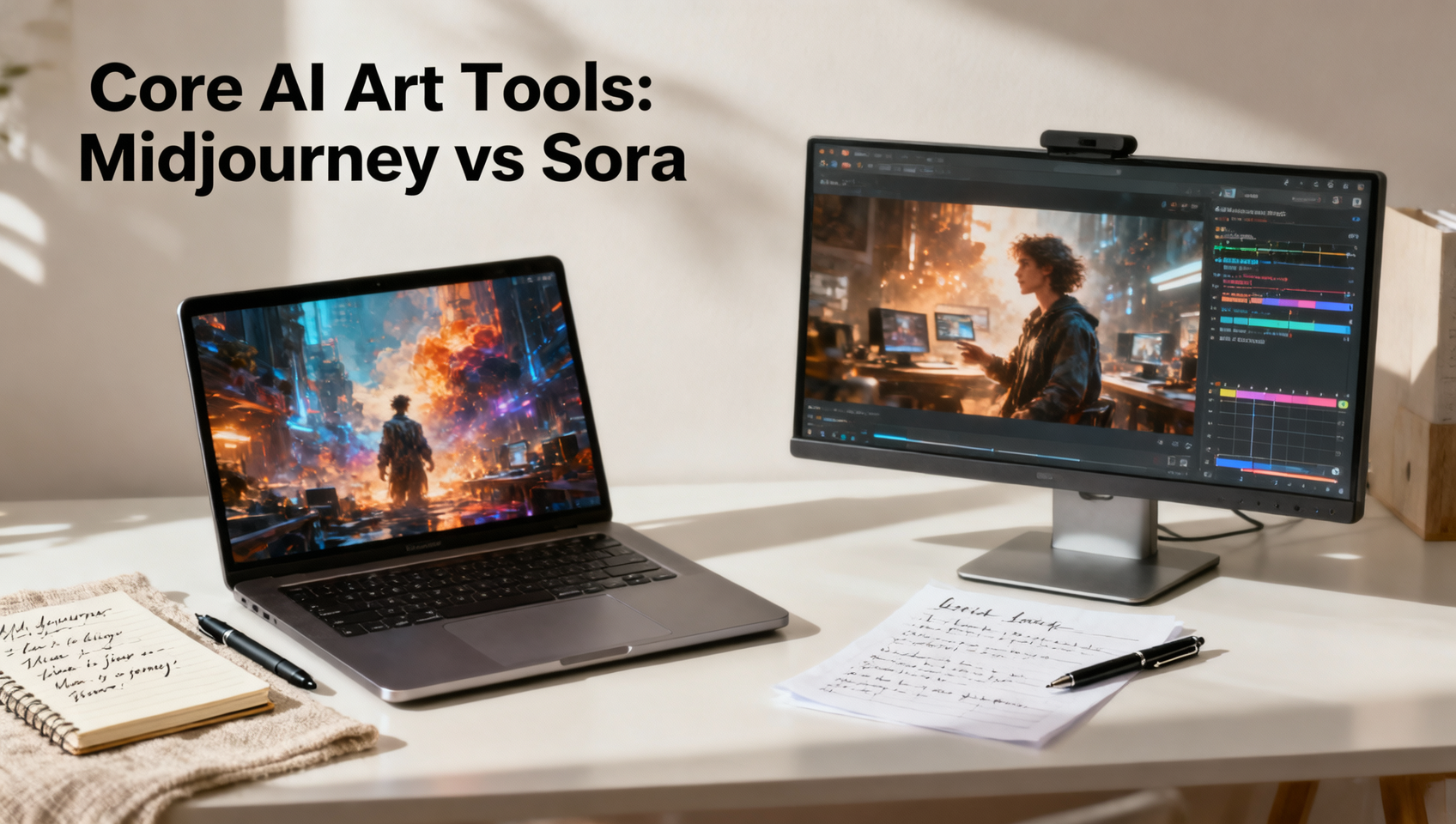
When evaluating core generative tools, the primary distinction lies in the output medium and the control mechanism. Midjourney specializes in high-fidelity static imagery with granular control over composition and style. Sora, representing the emerging class of video generation models, focuses on temporal consistency and motion physics.
{"headers":["Feature","Midjourney Focus","Sora Focus"],["Output Type","Static Imagery (PNG/JPG)","Video Clips (MP4/MOV"],["Control","Prompt + Parameters (--ar, --sref)","Prompt + Motion Dynamics"],["Best Use","Concept Art, Storyboards, Assets","Motion Graphics, Pre-vis, B-Roll"],["Iteration Speed","Seconds per image","Minutes per clip"]}The table above highlights the operational differences. Midjourney allows for rapid iteration on lighting, texture, and camera angle using parameters like --style raw or --v 7. Video generation currently requires more compute time and often yields less predictable results regarding specific character consistency across frames without additional workflow steps.
Integrated Workflows
Professional creators rarely rely on a single model for a final deliverable. The most robust pipelines use Midjourney for asset creation and video models for motion. For example, a marketing campaign might start with Midjourney to generate the key visual hero shots. Once the style is locked, those images can serve as reference frames for video generation tools.
To maintain consistency, use the --cref (character reference) or --sref (style reference) parameters in Midjourney to build a cohesive library of assets. When moving to video, you can upload these static generations as image prompts to guide the motion model. This ensures the color grading and character design remain stable between the static poster and the motion teaser.
Trying these workflows in a unified environment reduces context switching. You can test how a Midjourney image translates to motion without leaving your project dashboard. Try Midjourney in MidassAI Studio to access these capabilities within a single interface.
Strategic Summary
The decision between Midjourney and video-focused models is not binary. It is about sequence. Start with static to define the visual language. Once the aesthetic is approved, invest in video generation. This saves costs on video compute, which is generally higher than image compute, and prevents wasted iterations on motion before the design is finalized.
Deep Dive: AI Image Generation
Midjourney remains the industry standard for static generation due to its adherence to prompt semantics and artistic coherence. When crafting prompts for production, avoid vague adjectives. Instead, specify lighting setups and camera hardware.
Effective Prompt Structure:
/imagine prompt: cinematic shot of a cyberpunk street market, neon signage, rain slicked pavement, shot on Arri Alexa 65, 35mm lens --ar 2.39:1 --style raw --v 7
Key parameters to master include:
--ar: Aspect ratio is critical. Use--ar 16:9for video prep or--ar 4:5for social media.--style raw: Reduces the model's internal aesthetic bias, allowing your prompt words to drive the look rather than Midjourney's default beautification.--sref: Allows you to copy the style of an existing image URL. This is essential for brand consistency across multiple generations.
Precision here prevents the "AI look" that plagues amateur work. By controlling the seed and stylize values, you can generate variations that fit within a specific art direction rather than random explorations.
Deep Dive: AI Video Generation
Video generation tools like Sora introduce the dimension of time. The challenge here is temporal coherence. Objects must not morph unexpectedly, and physics should remain consistent. Currently, video models excel at atmospheric shots—clouds moving, water flowing, camera pans—rather than complex character acting.
When prompting for video, describe the camera movement explicitly. Terms like "slow zoom in," "tracking shot," or "drone flyover" help the model understand the motion vector. However, expect to generate multiple variations to get a usable clip. Unlike image generation, where you can inpaint specific regions easily, video editing often requires regenerating the entire clip or using separate tools for masking.
Audio Considerations
A complete multimedia project requires sound. While Midjourney and Sora handle visuals, AI music tools are becoming integral to the pipeline. Generative audio models can create background scores that match the mood of your visual assets.
The workflow involves generating the visual first, determining the pace and emotion, and then prompting the audio model to match. Syncing audio to AI-generated video can be tricky if the video length varies. Always generate your video clip first, note the exact duration, and then specify that duration in your audio generation prompt to ensure the loop or track fits perfectly without abrupt cuts.
Supporting Toolsets
Beyond generation, the ecosystem includes upscalers, face restorers, and editors. AI image generation often outputs at resolutions suitable for web but insufficient for print or large screens. Integrating an upscaling step is mandatory for professional work.
Additionally, version control for prompts is often overlooked. Keeping a log of which seed and parameter combinations produced the best results allows you to replicate success. Tools that offer history tracking and project organization are vital when managing hundreds of assets for a single campaign.
Platform Ecosystem
Choosing where to run these models matters. Running models locally offers privacy but requires significant hardware investment. Cloud platforms provide access to the latest versions, such as Midjourney v7, without hardware constraints.
MidassAI Studio consolidates these tools, allowing you to manage image and video workflows in one place. This reduces the friction of copying assets between Discord, web interfaces, and local storage. When evaluating a platform, look for API access, batch processing capabilities, and commercial licensing clarity. The "Company" or provider behind the tool should offer clear terms on ownership of generated assets, especially for commercial projects.
Final Thoughts
The landscape of AI art is splitting into specialized lanes. Midjourney owns the static visual definition, while video models handle motion. The most effective creators will be those who can orchestrate both. Do not wait for a single model to do everything. Build a pipeline that leverages the strengths of each tool. Start your static generation today to lay the groundwork for your motion projects.
Try Midjourney in MidassAI Studio to begin building your integrated workflow.