
midjourney
What Is Midjourney AI and How Does It Work?
Midjourney AI Team · July 23, 2026 · 6 min read
Keywords: what is midjourney, midjourney AI guide, text-to-image tutorial
Published: July 23, 2026 Author: Midjourney AI Team
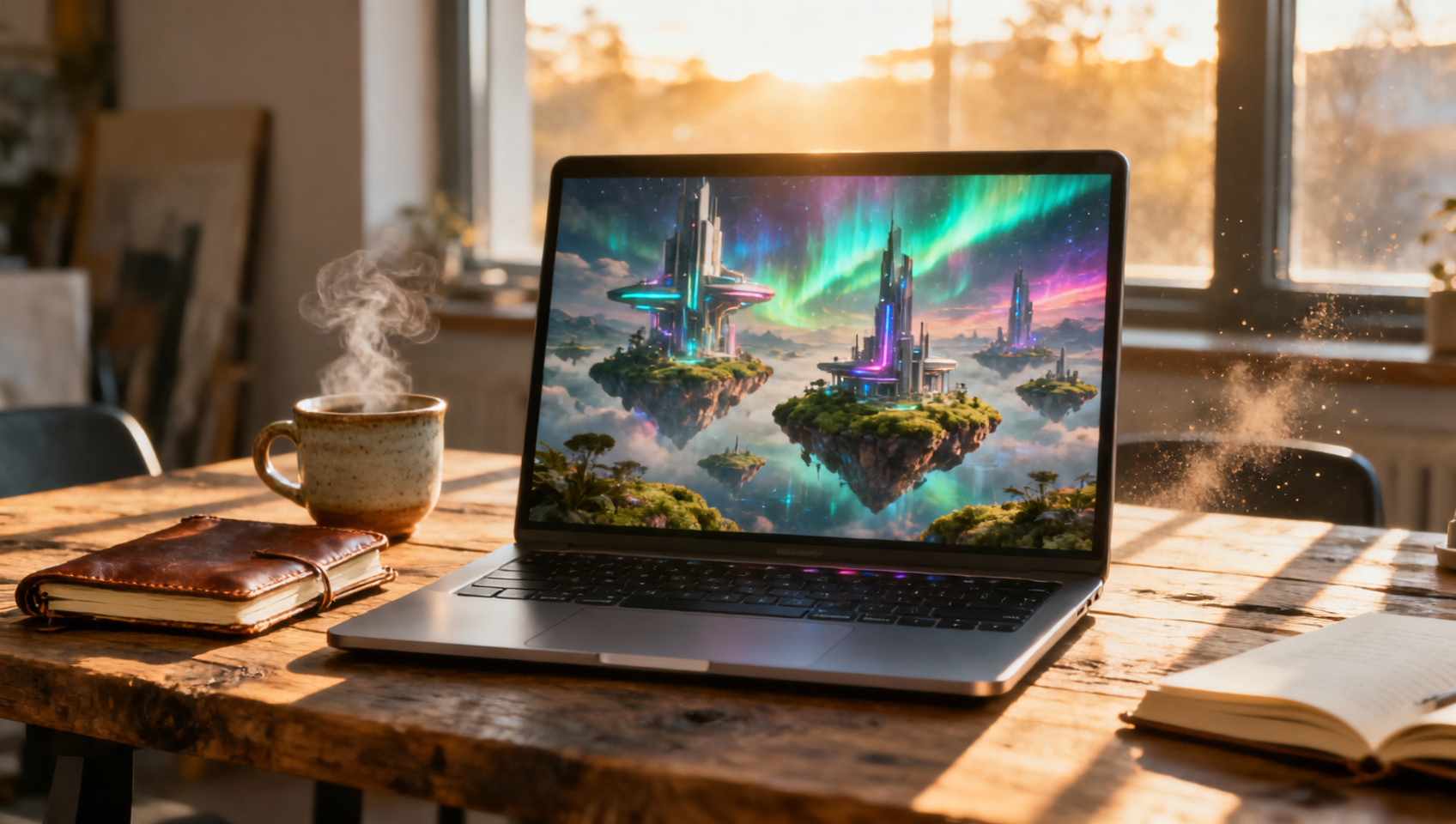
Defining the Engine Behind Modern AI Art
Midjourney is a generative artificial intelligence program that converts natural language text into detailed images. Unlike traditional graphic design tools that require manual manipulation of vectors or pixels, Midjourney interprets semantic prompts to construct visuals from scratch. It operates on a diffusion model architecture, similar to Stable Diffusion, but is distinctively tuned for artistic coherence, lighting, and texture without requiring extensive model tweaking by the user.
The core value proposition lies in its ability to understand nuance. When you type a description, the system does not merely search a database for matching images. It synthesizes new pixel data based on patterns learned from a massive dataset of image-text pairs. This allows for the creation of assets that do not exist in reality, ranging from photorealistic portraits to abstract concept art. For professionals, this shifts the workflow from execution to curation. You are no longer drawing every line; you are directing the vision.
How the Generation Process Functions
Understanding the mechanics helps you write better prompts. When you submit a request, the system tokenizes your text, breaking it down into understandable components. It then maps these tokens against latent space—a multi-dimensional map of visual concepts. The diffusion process begins with random noise. Over several steps, the algorithm iteratively removes this noise, guided by your text prompt, until a coherent image emerges.
Version 7 (--v 7) represents the current iteration of this model, offering improved prompt adherence and coherence compared to earlier versions. The system also utilizes a clustering method to generate four initial variations. These are not random guesses but distinct interpretations of the same semantic data. This allows you to select the composition that best fits your intent before upscaling. The underlying infrastructure handles the heavy computational load, meaning your local hardware specifications do not limit the generation quality.
Access Points: Discord vs. Web Interfaces
Historically, Midjourney operated exclusively through Discord. This required users to navigate public channels or direct messages with a bot, using slash commands like /imagine. While functional, this interface can feel cluttered for professional workflows where organization and privacy matter.
MidassAI Studio integrates Midjourney into a dedicated web environment. This removes the noise of Discord servers and provides a streamlined dashboard for managing generations. You retain access to the core model capabilities but gain a workspace designed for asset management. Instead of scrolling through chat logs to find previous renders, you have a library view. This is critical for teams who need to iterate on specific concepts without losing context. Whether you choose the Discord bot or the MidassAI Studio web app, the underlying model remains the same, but the workflow efficiency differs significantly.
Mastering Parameters for Control
Raw prompts often yield generic results. To achieve specific outcomes, you must use parameters. These are suffixes added to your prompt that instruct the model on aspect ratio, stylization, and versioning.
- Aspect Ratio (
--ar): By default, images are square. For social media stories, use--ar 9:16. For cinematic shots,--ar 16:9is standard. Example:/imagine a cyberpunk street scene --ar 16:9. - Stylization (
--style raw): Midjourney applies a default aesthetic beauty bias. Adding--style rawreduces this bias, forcing the model to adhere more strictly to your literal prompt rather than optimizing for prettiness. This is essential for technical illustrations or specific branding requirements. - Character Reference (
--cref): Consistency is a major challenge in AI. The--crefparameter allows you to reference a URL of a character face to maintain identity across different generations. - Style Reference (
--sref): Similar to character reference, this allows you to upload an image URL to copy the color palette and artistic style without copying the content. - Versioning (
--v 7): Explicitly calling the version ensures your results are consistent over time. As models update, outputs can shift. Locking to--v 7prevents unexpected changes in your pipeline.
Using these parameters transforms the tool from a novelty into a production asset. In MidassAI Studio Midjourney, you can test these workflows without memorizing every command syntax, as the interface often provides toggles for common parameters.
{"headers":["Platform","Primary Use Case","Learning Curve"],["Midjourney (Discord)","Community & Rapid Prototyping","Medium"],["MidassAI Studio","Professional Workflow & Management","Low"],["DALL·E 3","Accuracy & Text Rendering","Low"],["Stable Diffusion","Local Control & Customization","High"]}Who This Tool Is For
This technology is not limited to digital artists. Marketing teams use it to generate mood boards for campaigns before hiring photographers. Game developers utilize it for concepting environments and items during the pre-production phase. Architects visualize textures and lighting scenarios rapidly. Even writers use it to visualize scenes for storyboarding.
If your work involves visual communication, Midjourney reduces the time between idea and visualization. However, it requires a shift in mindset. You must learn to describe lighting, composition, and mood verbally. It is best suited for creators who want to iterate quickly and are comfortable acting as art directors rather than hands-on illustrators.
Ethical Considerations and Creativity
A common question arises: Is this the end of human creativity? The tool does not replace intent. It replaces the friction of execution. The creative burden shifts to the quality of the idea and the curation of the output. There are valid concerns regarding copyright and the data used to train these models. Professional usage requires awareness of these implications, especially when generating assets for commercial clients.
Transparency is key. When delivering work generated with AI, disclose the workflow. Use the tool to augment your capabilities, not to deceive clients about the origin of the work. The industry is moving toward hybrid workflows where AI handles the heavy lifting of texture and composition, while humans refine the details and ensure brand alignment.
The Expanding Ecosystem: Video and Music
While image generation is the core function, the underlying technology is expanding. Midjourney and similar labs are exploring video generation, allowing static images to move with temporal consistency. There is also significant development in AI music and audio tools that integrate with visual pipelines.
For now, focus on mastering static image generation. The principles of prompting, lighting, and composition learned here will translate directly to video workflows as they become available. Keeping your workflow organized in a platform like MidassAI Studio ensures you are ready to integrate these new modalities without rebuilding your process from scratch.
Getting Started with Your First Generation
To begin, you do not need complex hardware. Access the tool through MidassAI Studio to bypass the Discord learning curve. Start with a simple subject and add lighting descriptors. Instead of "a cat," try "a Maine Coon cat sitting on a velvet chair, cinematic lighting, shallow depth of field." Add --ar 3:2 and --style raw to control the output.
Review the four variations. Select the one that matches your vision and upscale it. If the result is close but not perfect, use the variation buttons to tweak the noise seed rather than rewriting the entire prompt. This iterative process is how professionals achieve high-fidelity results.
Ready to streamline your generation workflow?