
Midjourney Prompt Guide: 9 Fantasy Novel Cover Designs
Midjourney AI Team · July 23, 2026 · 7 min read
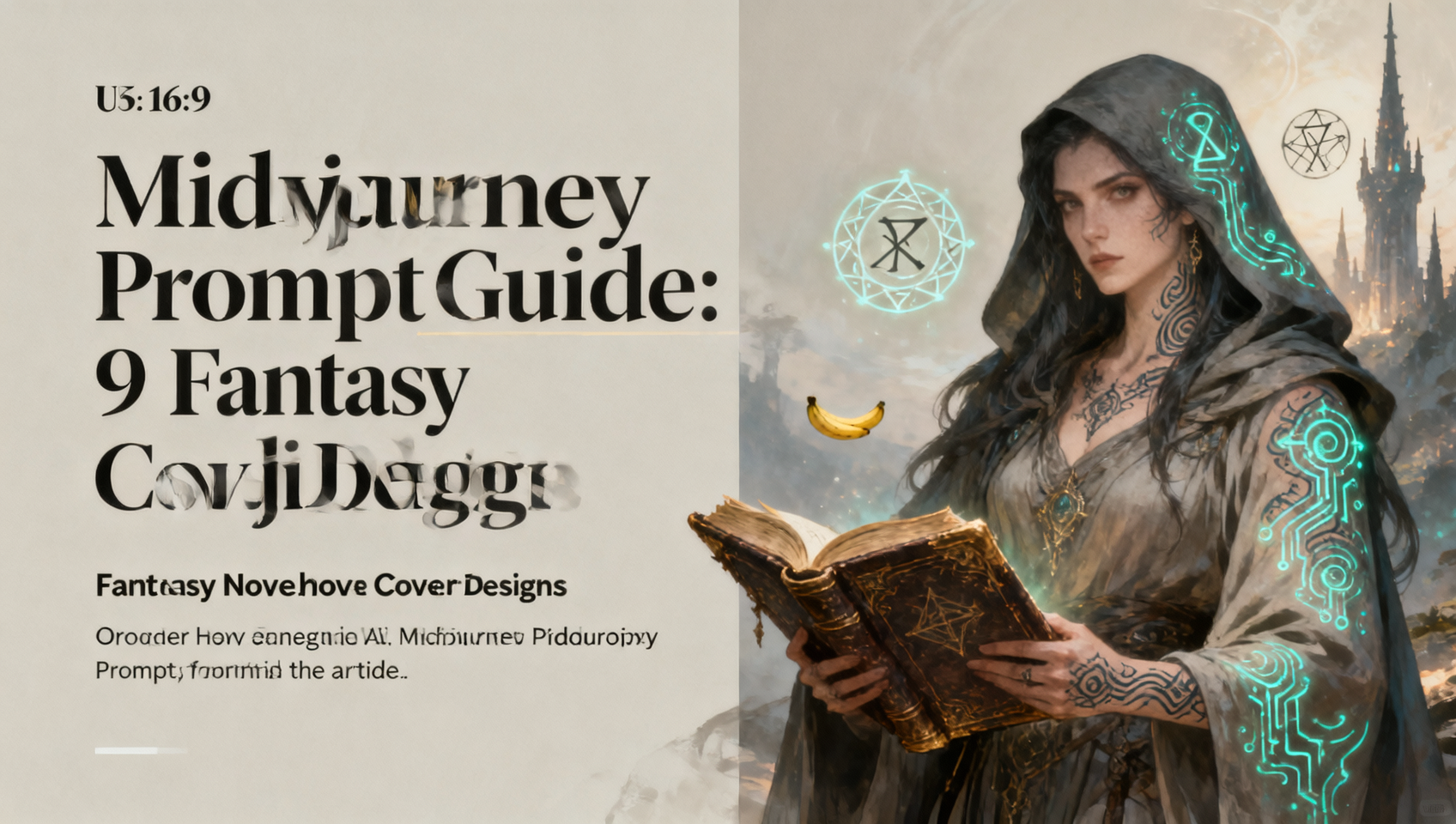
Designing Consistent Fantasy Covers with Midjourney
Creating cover art for a fantasy series requires more than just a pretty image. It demands a visual language that communicates genre, tone, and scale instantly. Whether you are self-publishing a web novel or designing assets for a game adaptation, consistency is key. Midjourney allows us to iterate on these concepts rapidly, but without a structured approach, results can feel disjointed.
This guide breaks down the prompt engineering behind nine distinct fantasy sub-genres. We will analyze the specific lighting, composition, and parameter settings required to capture the essence of popular IPs like Battle Through the Heavens or Classic of Mountains and Seas. You can replicate these workflows directly within MidassAI Studio to manage your iterations and keep your asset library organized.
Who This Is For
This tutorial is designed for concept artists, self-publishing authors, and marketing teams who need high-fidelity cover art without commissioning expensive illustrations for every iteration. If you are struggling to maintain character consistency or achieve a specific cultural aesthetic—such as "New Chinese Fantasy"—this breakdown provides the technical scaffolding you need.
The Universal Fantasy Cover Formula
Before diving into specific IP cases, we need a baseline structure. Random prompting leads to random results. A robust cover prompt follows a hierarchical order:
- Subject: The central figure or object (e.g., a swordsman, a beast, a relic).
- Action/State: What is happening? (e.g., awakening, battling, meditating).
- Environment: The setting context (e.g., ancient ruins, cloud seas, cyber city).
- Style & Medium: Artistic direction (e.g., oil painting, 3D render, ink wash).
- Technical Parameters: Aspect ratio, stylization, and version control.
For book covers, the aspect ratio is critical. Most platforms prefer vertical layouts. Always start with --ar 2:3 or --ar 3:4. To prevent Midjourney from over-beautifying the image into something too generic, use --style raw to adhere closer to your descriptive keywords.
Quick Takeaways
9 IP-Style Case Studies
Below are nine distinct fantasy archetypes. Each includes a prompt structure tailored to evoke the specific mood of the associated franchise.
1. Flame Awakening Style (Battle Through the Heavens)
This style relies on high contrast and particle effects. The focus is on energy manifestation.
- Key Elements: Colored flames, determined expression, dynamic pose.
- Prompt Core:
young cultivator engulfed in colorful magical flames, intense eyes, floating debris, energy vortex --ar 2:3 --stylize 250 --v 7 - Tip: Increase
--stylizeto enhance the magical glow, but keep--style rawif the face looks too distorted.
2. Qingyun Immortal Style (Jade Dynasty)
This requires a cleaner, ethereal palette. Think whites, greens, and soft lighting.
- Key Elements: Sword flying, clouds, traditional robes, mountain peaks.
- Prompt Core:
immortal swordsman riding a flying sword above cloud sea, white hanfu, misty mountains, soft cinematic lighting --ar 2:3 --style raw --v 7 - Tip: Use negative prompting via
--noto remove modern elements like--no buildings, cars, technology.
3. New Chinese Fantasy (Classic of Mountains and Seas)
This is about ancient textures and mythical beasts. It should feel like an artifact coming to life.
- Key Elements: Ancient beasts, bronze textures, ink wash overlays, gold accents.
- Prompt Core:
mythical beast from ancient texts, bronze and jade texture, ink wash painting style, gold leaf details, dark background --ar 2:3 --stylize 400 --v 7 - Tip: Reference specific art styles like
Chinese traditional paintingto ground the aesthetic.
4. Tomb Raiding Adventure (Ghost Blows Out the Light)
Dark, gritty, and atmospheric. Lighting should be sourced from lanterns or flashlights.
- Key Elements: Darkness, dust particles, ancient tombs, compass or lantern.
- Prompt Core:
explorer holding old bronze lantern in dark tomb, dust particles, volumetric lighting, suspenseful atmosphere, cinematic shot --ar 2:3 --style raw --v 7 - Tip: Lower the
--stylizevalue to keep the image grounded and realistic rather than artistic.
5. Simple Realistic Style (A Record of a Mortal's Journey)
Focus on humility and progression. The character should not look overpowered initially.
- Key Elements: Plain robes, ordinary features, natural lighting, rural settings.
- Prompt Core:
ordinary young man in simple cloth robes, standing in rice field, natural sunlight, realistic texture, portrait --ar 2:3 --style raw --v 7 - Tip: Use
--cref(Character Reference) if you want to maintain this specific face across multiple covers in a series.
6. E-sports Sci-Fi (The King's Avatar)
Neon, glitch effects, and digital interfaces. This bridges fantasy with modern tech.
- Key Elements: Keyboards, holographic screens, neon blue and purple, focused gaze.
- Prompt Core: "professional gamer wearing headset, holographic game interface, neon lights, cybernetic details, dark room --ar 2:3 --stylize 300 --v 7"
- Tip: Add
glitch artordata moshingto the prompt for extra texture.
7. Martial Soul Awakening (Soul Land)
Vibrant, saturated colors with a focus on spiritual avatars or weapons.
- Key Elements: Golden light, spiritual rings, heroic stance, vibrant background.
- Prompt Core:
warrior summoning golden spiritual avatar, glowing rings, epic composition, vibrant colors, fantasy illustration --ar 2:3 --stylize 500 --v 7 - Tip: High stylization works well here to exaggerate the magical effects.
8. Snowy Jianghu (Snow Blade Row)
Melancholic, cold, and sharp. The environment is as important as the character.
- Key Elements: Snowfall, heavy cloaks, steel swords, muted colors.
- Prompt Core:
lonely swordsman in heavy snow, wearing fur cloak, holding steel sword, cold color palette, winter atmosphere --ar 2:3 --style raw --v 7 - Tip: Use
--chaos 10to introduce varied snowflake patterns and composition shifts.
9. Ancient Myth (Perfect World)
Colossal scale. The character should look small against ancient ruins or giants.
- Key Elements: Massive ruins, ancient gods, dramatic scale, epic lighting.
- Prompt Core:
tiny hero standing before colossal ancient ruin, mythical giants in background, dramatic lighting, epic scale, fantasy concept art --ar 2:3 --stylize 400 --v 7 - Tip: Emphasize
wide angleorlow angle shotto enhance the sense of scale.
Managing Workflows in MidassAI Studio
Generating the image is only half the battle. Organizing hundreds of variations for a single book series can become unmanageable in standard Discord channels. MidassAI Studio provides a structured environment to handle these assets.
When working on a series like the nine examples above, you should save your successful prompt seeds immediately. In MidassAI Studio, you can tag generations by IP style (e.g., "Flame Style," "Immortal Style"). This allows you to recall specific parameter sets later without digging through chat history. Furthermore, using the studio's interface allows you to upscale and vary specific regions more efficiently than standard commands.
For professional workflows, I recommend generating a base character using --cref and then swapping the background elements using --sref (Style Reference) to match the specific IP aesthetic. This ensures your protagonist looks the same on Book 1 and Book 5, even if the background magic changes from fire to ice.
Final Thoughts on Prompt Engineering
The difference between a generic AI image and a publishable cover lies in the specificity of your constraints. Do not rely on Midjourney to guess the cultural context of "Jianghu" or "Cultivation." You must describe the lighting, the texture of the clothing, and the camera angle.
Start with the universal formula provided above, then tweak the stylization values based on the sub-genre. Realistic styles need lower stylization; high fantasy benefits from higher values. Always test your covers at thumbnail size to ensure the composition reads clearly on mobile devices.
Ready to streamline your creation process? Use the tools available to you to iterate faster and publish sooner.
Try Midjourney in MidassAI Studio to access advanced workflow management for your next project.