
Mechanical Insect Midjourney Prompt Guide: Metal Carapace & Sci-Fi Lighting
Midjourney AI Team · July 23, 2026 · 7 min read
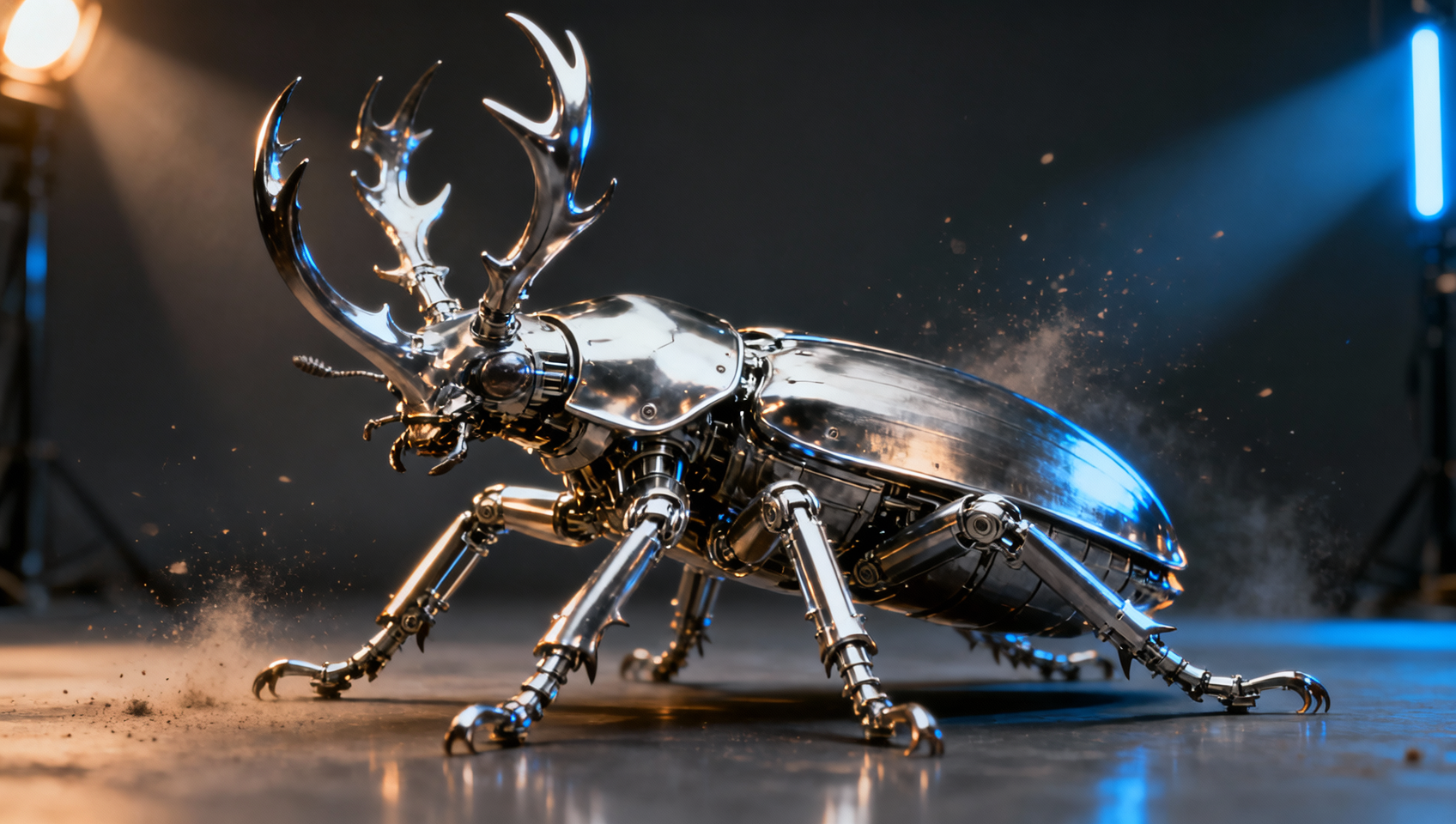
Mastering Biomechanical Aesthetics in Midjourney
Creating convincing mechanical insects requires more than just typing "robot bug" into the generator. The difference between a toy-like render and a studio-grade concept piece lies in the specificity of materials, lighting, and camera optics. When working within MidassAI Studio, you have access to the latest Midjourney models, allowing for precise control over metallic reflections and complex joint articulation.
This guide breaks down the exact syntax needed to generate high-fidelity mechanical insects. We will focus on achieving realistic metal carapaces, functional-looking仿生 (biomimetic) joints, and cinematic macro lighting. Whether you are designing assets for a game or creating standalone sci-fi art, understanding how Midjourney interprets material descriptors is critical.
Who This Guide Is For
This workflow is designed for concept artists, game developers, and sci-fi illustrators who need consistent, high-detail mechanical assets. If you are struggling with prompts that produce plastic-looking robots or insects that lack structural integrity, this breakdown addresses those specific failure points. You should have basic familiarity with Discord commands or the MidassAI Studio interface, but no advanced engineering knowledge is required.
The Core Prompt Template
To maintain consistency across multiple generations, you need a structured prompt skeleton. Do not rely on natural language sentences alone; Midjourney responds better to token-weighted phrases. Below is a foundational template you can copy and adapt directly in MidassAI Studio.
/imagine prompt: a highly detailed mechanical beetle, carbon fiber and brushed tungsten carapace, exposed biomechanical joints with hydraulic pistons, macro photography, depth of field, cinematic sci-fi lighting, volumetric fog --ar 16:9 --style raw --v 7 --s 250This structure prioritizes the subject first, followed by materials, structural details, camera settings, and finally parameters. Changing the insect type (beetle, mantis, dragonfly) while keeping the material and lighting constants ensures a cohesive series.
Keyword Breakdown and Material Logic
The quality of your render depends heavily on the adjectives you choose to describe surface textures. Generic terms like "metal" often result in flat, uninteresting gray surfaces. Instead, use specific alloys and finish types.
Surface Materials
- Brushed Tungsten: Produces a dull, heavy metal look with subtle horizontal grain. Ideal for armor plating.
- Oxidized Copper: Adds greenish patina details, suggesting age or exposure to harsh environments.
- Polished Chrome: Creates high-contrast reflections. Use sparingly as it can distort the insect's shape if lighting isn't controlled.
- Carbon Fiber: Adds a woven texture that reads as high-tech and lightweight.
Structural Components
To make the insect look functional rather than decorative, describe the mechanics. Terms like "exposed wiring," "hydraulic actuators," and "servo motors" force the AI to generate internal complexity. Avoid vague terms like "cool parts." Instead, specify "articulated leg segments" or "ventral thrusters."
Lighting and Atmosphere
Lighting defines the mood. For a sinister look, use "rim lighting" or "neon underglow." For a documentary feel, choose "natural sunlight" or "studio softbox." Adding "volumetric fog" helps separate the subject from the background, enhancing the macro effect.
Quick Takeaways
Parameter Configuration for Precision
Parameters control how Midjourney processes your tokens. For mechanical subjects, you often want less artistic interpretation and more prompt adherence.
Version and Stylize
Always specify --v 7 to utilize the latest rendering engine improvements in geometry and texture. The --stylize parameter (--s) controls how much artistic license the AI takes. For mechanical designs, keep this between 100 and 250. Higher values might add unnecessary flourishes that break the mechanical logic.
Aspect Ratio and Raw Mode
Use --ar 16:9 for cinematic presentations or --ar 3:4 for character sheets. Crucially, include --style raw. This setting reduces Midjourney's default aesthetic bias, ensuring your specific material keywords (like "tungsten") are respected over the model's default preference for glossy surfaces.
Reference Images
If you have a specific joint mechanism in mind, use --sref (style reference) or --cref (character reference). You can upload a photo of a real insect or a mechanical sketch to guide the composition. In MidassAI Studio, uploading references is streamlined, allowing you to iterate faster than on standard Discord channels.
Common Pitfalls and Corrections
Even with a solid template, errors occur. Here is how to troubleshoot common issues.
Issue: The insect looks like plastic. Fix: Increase the contrast in your material keywords. Add "heavy metal," "scratched surface," or "oil stains." Plastic reflects light differently than metal; specifying "anisotropic reflection" can help the AI understand metallic properties.
Issue: Too many legs or asymmetrical designs. Fix: Mechanical insects often suffer from symmetry issues. Add "symmetrical design" to the prompt. If using v7, the model handles symmetry better, but explicit instructions still help. You may need to reroll several times to get perfect articulation.
Issue: Background is too busy. Fix: Use "blurred background" or "bokeh" in the prompt. Alternatively, set the background to "black void" or "white studio background" if you need the asset for compositing later.
Integrating into Broader AI Workflows
Once you have generated your static mechanical insect, the workflow often extends beyond a single image. In a professional pipeline, this asset might need animation or sound design to fit into a larger project.
AI Video Integration
Static concepts are powerful, but motion sells the design. You can take your generated Midjourney image and feed it into AI video tools to create a short loop of the insect moving its mandibles or walking. This is particularly useful for pitch decks or game trailers. The high fidelity of the Midjourney render ensures the video generation model has enough detail to track movements accurately.
Audio and Atmosphere
For immersive presentations, consider pairing the visual with generated soundscapes. Mechanical insects imply specific sounds: whirring servos, hydraulic hisses, or metallic clicking. While Midjourney handles the visual, pairing it with AI-generated audio creates a complete sensory experience for clients or audiences.
Tool Ecosystem
Managing these assets requires organization. MidassAI Studio provides a unified environment where you can generate, iterate, and store these prompts without losing context. Instead of juggling multiple Discord servers, you can keep your mechanical insect library organized alongside your video and audio assets.
Finalizing Your Asset Library
Consistency is key when building a library of mechanical creatures. Save your successful prompts as variables or templates within your workflow. If you generate a successful beetle, note the exact lighting and material tokens used. When you move on to a mechanical spider, keep the lighting identical to ensure they look like they exist in the same universe.
Iterate rapidly. Generate batches of four, select the best structural elements, and use Variations to refine specific areas like the head or leg joints. Do not settle for the first result. The power of Midjourney lies in the iteration process, refining the noise until the mechanical logic holds up under scrutiny.
Start Building in MidassAI Studio
Generating high-fidelity mechanical insects is a balance of artistic vision and technical prompt engineering. By controlling materials, lighting, and parameters, you move from random generations to intentional design. The latest models in MidassAI Studio offer the stability needed for professional concept work.
Ready to refine your biomechanical designs? Access the latest Midjourney models and streamline your workflow today.